
People are not just Googling anymore.
They’re asking ChatGPT, Gemini, and other AI assistants direct questions—and getting complete answers back.
The problem?
You have no idea if your business is showing up in those answers.
That’s where the idea of “Google Analytics for AI” comes in.
What “Google Analytics for AI” Actually Means
AI tools don’t use traditional search result rankings.
There’s no page one, no position three, no neat list of ten blue links.
Instead, these models synthesize an answer from multiple sources across the web. Your visibility isn’t about rankings anymore—it’s about presence and context.
What you track matters differently now:
- Mentions: Does your business appear at all?
- Citations: Which pages or posts does the AI seem to pull from?
- Frequency: How often do you appear across different prompts?
- Positioning: Are you featured early in the response or buried deep?
- Share of voice: How often are you mentioned compared to competitors?
Put simply, AI visibility replaces search ranking as the new performance benchmark.
What the Dashboard Looks Like
Think of the dashboard as a cross between Google Analytics and an SEO tracking tool—except the currency is prompts instead of keywords.
You’re not tracking position changes; you’re tracking whether your brand is part of the answer at all.
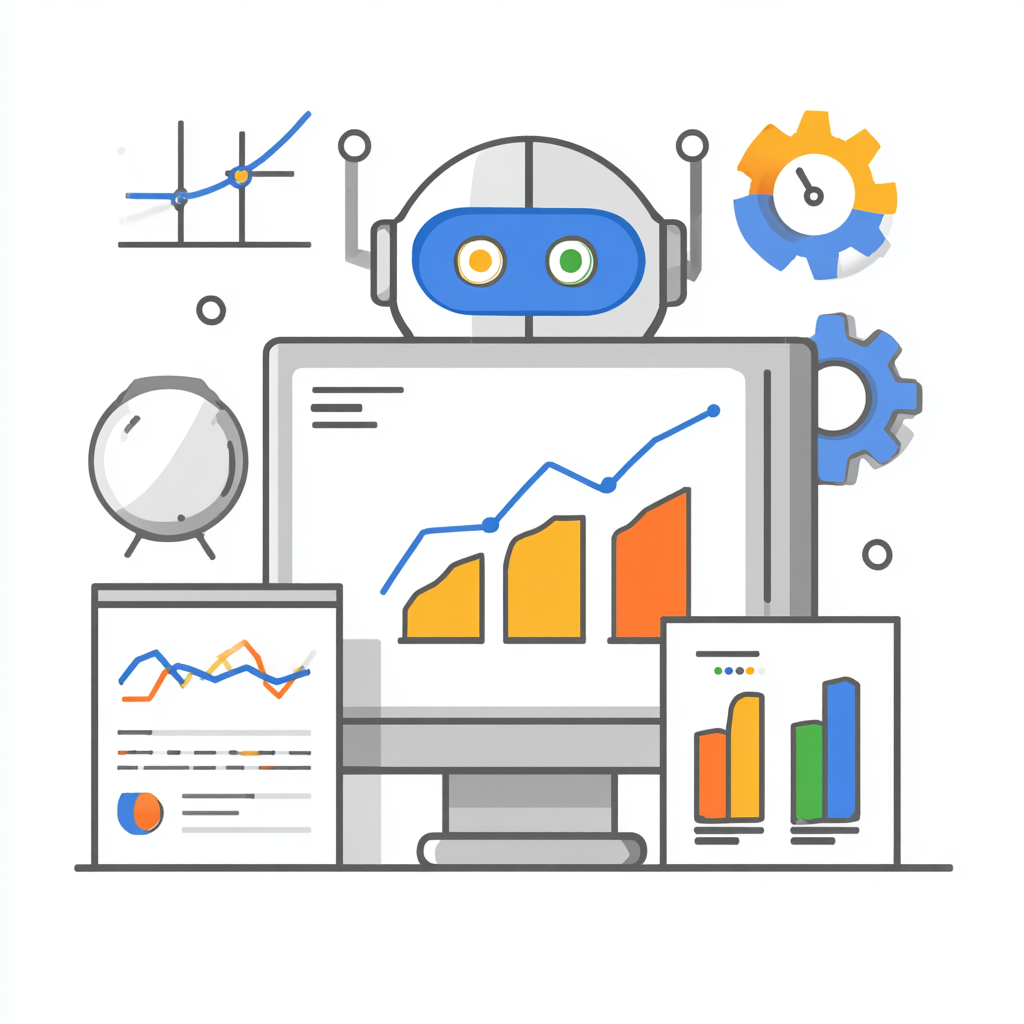
A well-built AI analytics dashboard typically includes:
- Visibility percentage across selected prompts
- Prompt-level tracking (the exact questions people ask)
- Competitor comparison and share of voice
- Pages or content sections most often cited by AI
- Trends and shifts in visibility over time
Example:
Let’s say you own a roofing company in New Jersey.
- 28% visibility for “roof repair NJ” prompts
- Top competitor at 62% visibility
- Six of your web pages being used across AI tools
- Mentions primarily sourced from blog content about storm damage
That snapshot becomes your AI performance report—your new equivalent of an SEO ranking page.
How AI Tracking Tools Actually Work
So how do these visibility tools get their data?
They simulate real user behavior by repeatedly asking AI systems the kinds of questions your customers ask.
- Define the prompts.
Example: “best landscaping supply store in Monmouth County.” - Run those prompts across multiple AI platforms (ChatGPT, Gemini, Claude, Copilot).
- Record the results:
- Did your business show up?
- Where did it appear?
- What content was referenced or cited?
- Track the data over time to identify visibility trends.
Since there’s no API or “ranking feed” from these AI systems, testing and measurement happen through observation—repeated queries, analysis, and content mapping.
The Shift: From SEO Rankings to AI Visibility
For years, marketing teams focused on:
- Keywords
- Search rankings
- Backlinks
But AI-driven search doesn’t care about keyword density—it cares about clear answers, authority, and structure.
To